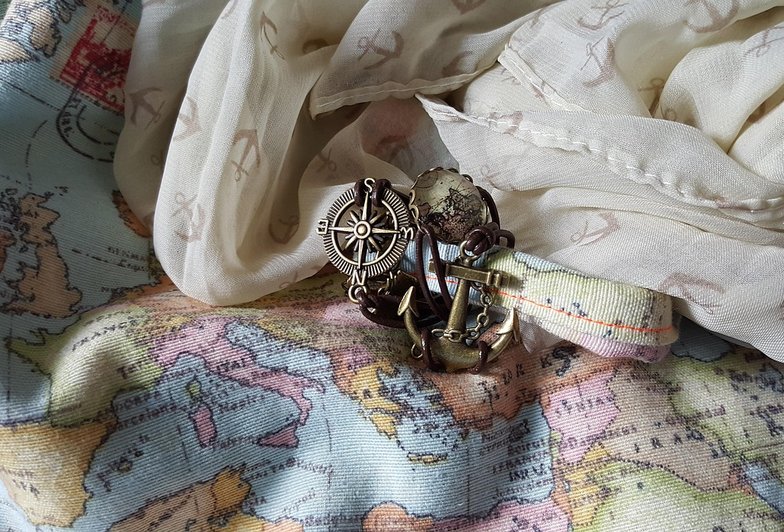






The Year I Stopped Making Resolutions and Started Making Directions

Every January for most of my twenties, I sat down with a notebook and wrote a list of resolutions. Lose ten pounds. Read fifty books. Get promoted. Save more money. By February, the list was usually buried under junk mail, and by December I couldn't remember half of what I'd written. The problem wasn't discipline. The problem was that resolutions are destinations, and I was treating my life like a series of airports instead of a landscape I actually had to live in.
The year I turned thirty, I tried something different. Instead of writing what I wanted to achieve, I wrote down how I wanted to move. I wanted to move toward work that felt meaningful, even if it paid less at first. I wanted to move toward people who asked good questions. I wanted to move away from the habit of saying yes to everything out of fear. None of these were goals in the traditional sense. They were directions, and directions don't expire on December 31st.
Why Directions Beat Destinations
A resolution is binary. You either hit the number or you don't. A direction is a heading you can adjust. When I decided I wanted to move toward more meaningful work, I didn't have to quit my job the next day. I could start by taking on one project that mattered to me, or by having a conversation with someone whose career I admired. Small movements in a consistent direction add up in ways that sporadic sprints toward a finish line never do.
Directions also survive setbacks better. When I missed a resolution, I felt like I'd failed. When I drifted off course from a direction, I could simply correct. That shift in framing sounds small, but it changed how I talked to myself on hard days. Instead of asking why I wasn't where I thought I should be, I started asking whether I was still pointed the right way.
How to Set a Direction This Year
Start by naming three words that describe how you want your days to feel. Not what you want to own or accomplish, but how you want the ordinary Tuesday afternoons of your life to feel. For me, those words were curious, grounded, and useful. Then ask yourself what kinds of choices tend to produce those feelings, and what kinds of choices tend to pull you away from them.
From there, pick one small action you can take this week that moves you in that direction. Not a plan for the whole year. Just one step. Maybe it's a thirty-minute walk without your phone. Maybe it's sending an email to someone you've been meaning to reconnect with. Maybe it's finally opening the document you've been avoiding.
The point isn't to have it all figured out. The point is to keep moving in a direction that feels like yours. Resolutions ask you to be a different person by a certain date. Directions ask you to become more of who you already are, one honest step at a time.







Trading rigid yearly goals for a compass-like sense of direction changed how I move through my career and my life.
One protected hour on Sunday can reshape your entire week without adding a single productivity app to your life.
Changing paths isn't a leap, it's a series of small steps that only look obvious in hindsight.
Subtracting commitments from your life is harder than adding them, and often more rewarding.
You don't need one mentor, you need a small circle of people who each see a different part of you.